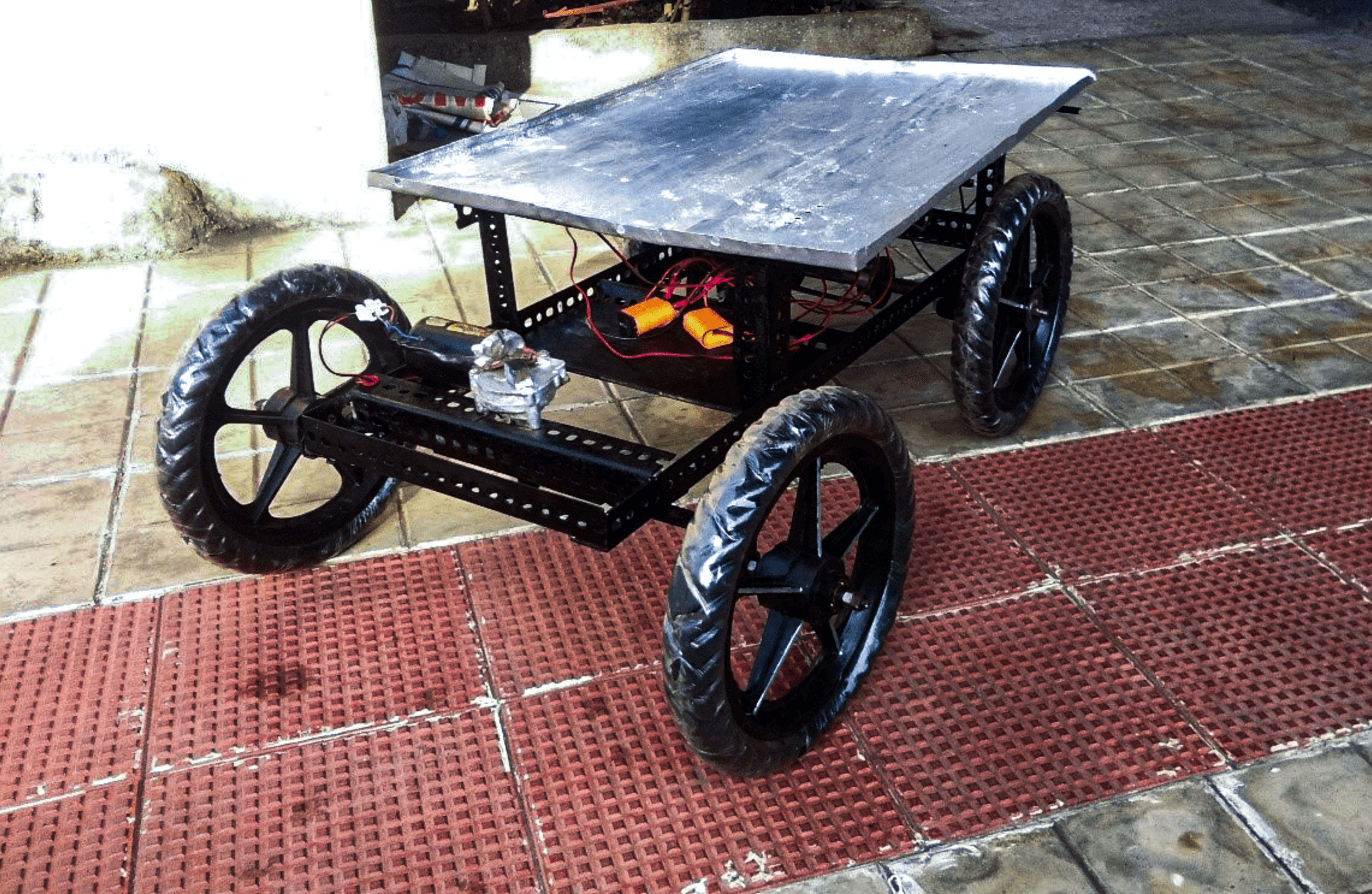
The objective of this project was to design and fabricate an electric load-carrying cart to minimize manual effort, reduce time for transporting goods, and provide an eco-friendly, low-maintenance alternative to conventional trolleys
Overview
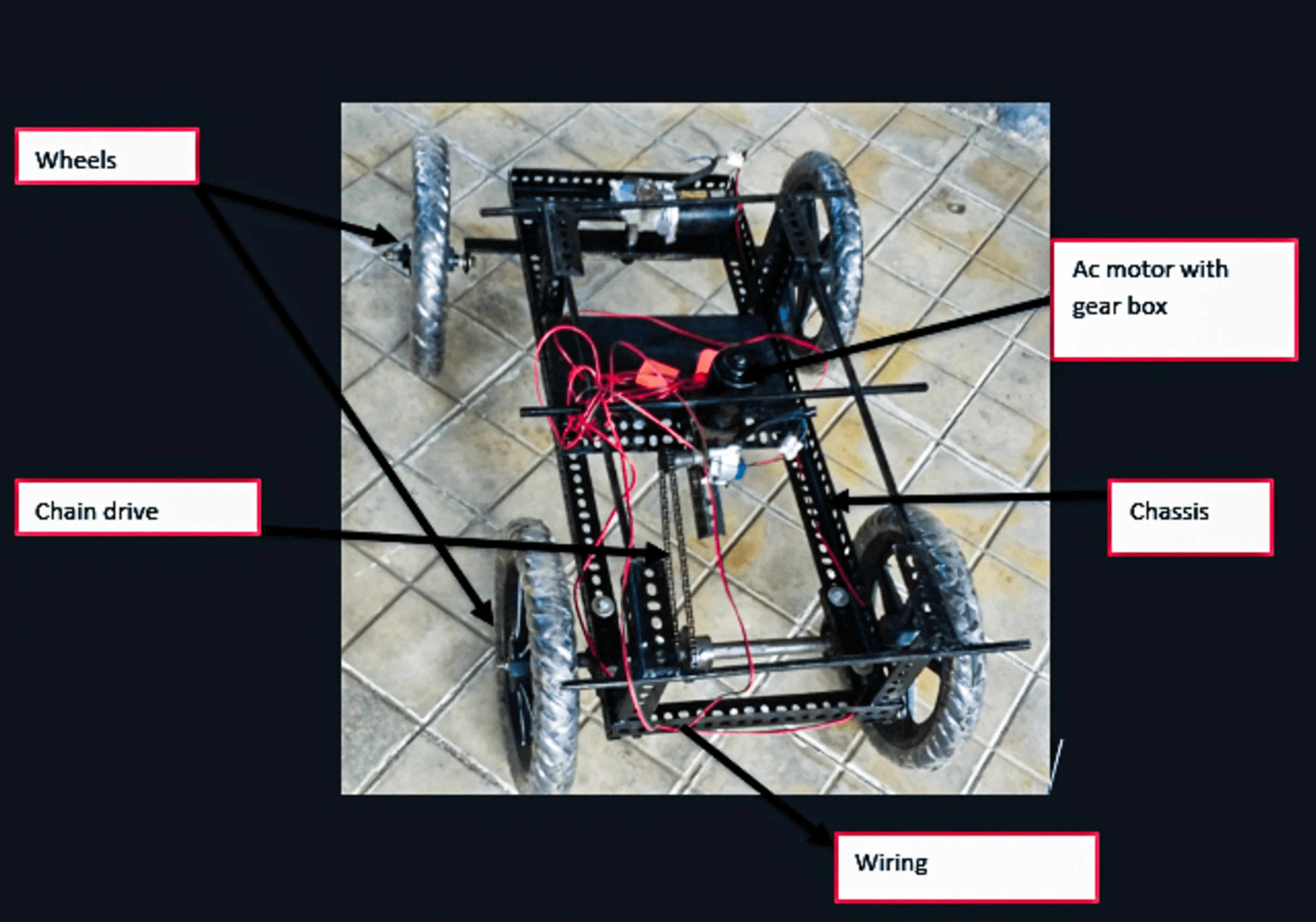
Powered by a 1 kW AC motor with gearbox, running on a 48 V battery pack.
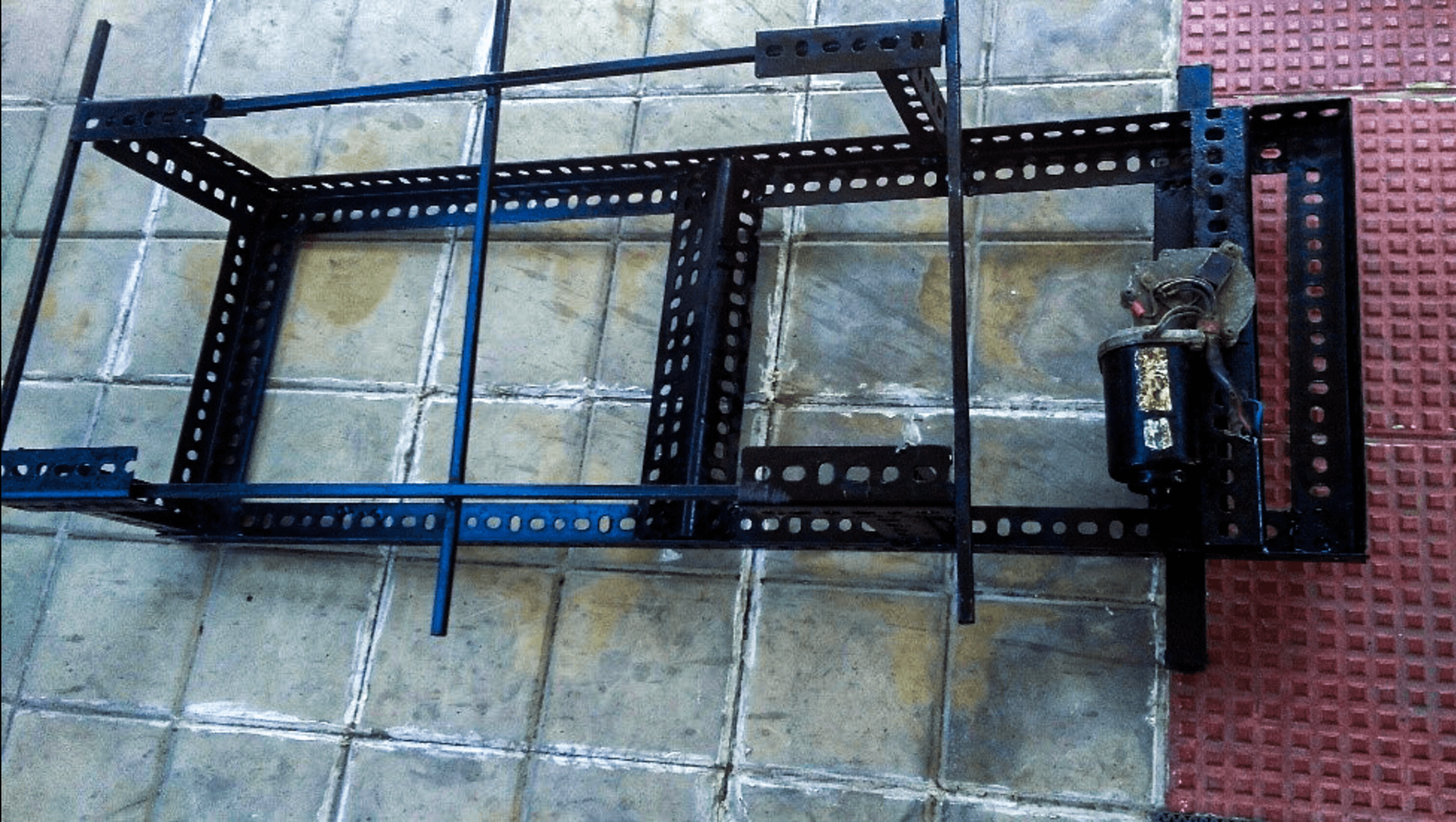
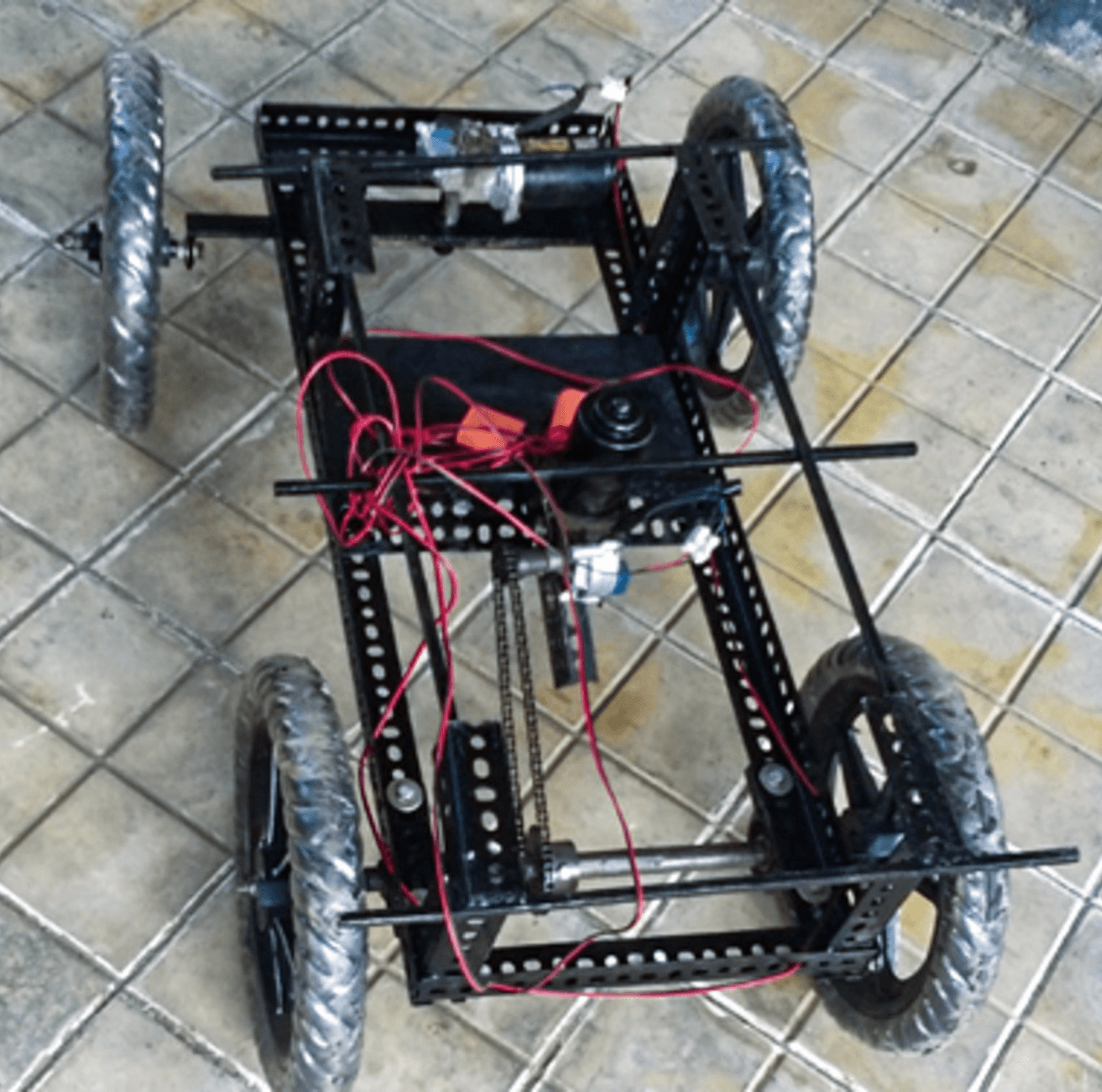
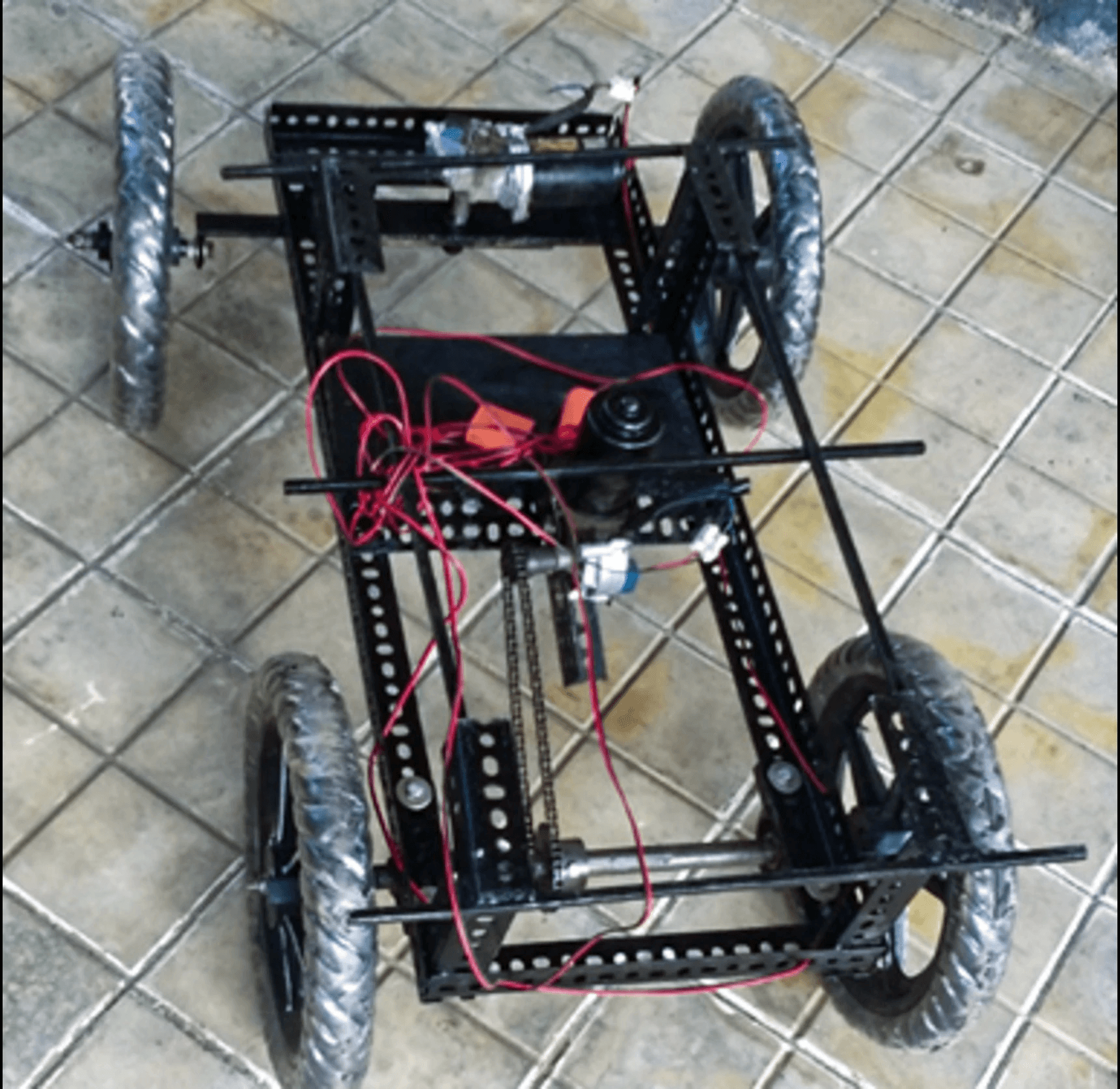
Transmission via chain and sprocket drive; ladder-type MS chassis frame; Ackermann steering system.
Features: variable speed control, braking system (cycle disc), carrying capacity of ~50 kg.
Focused on improving ergonomics, reducing strain compared to manual trolleys, and enabling industrial applicability in manufacturing plants and warehouses
My key involvement
Contributed to chassis design, ensuring ladder frame stability and weight balance.
Assisted in motor selection and calculation of torque, current, and speed to match load capacity.
Participated in fabrication (cutting, welding, drilling, assembling components).
Helped in wiring setup for motor–battery–controller integration.
Documented results, prepared diagrams, and assisted in presenting findings in the project report
My additional responsibilities
Coordinated cost estimation, including material, machining, and labor (~₹13,524).
Conducted market study and ergonomics research to justify design choices.
Managed workshop scheduling, tool procurement, and ensured team adherence to deadlines.
Assisted with final documentation (Black Book, presentation, viva prep).
Role & impact
Drove chassis design and stability analysis; performed torque/current/speed calculations for motor–load matching.
Actively involved in fabrication and integration (welding, drilling, assembly, wiring).
Co-prepared technical documentation and cost analysis, ensuring industrial feasibility.
Methods & tools
Powertrain: AC brushless motor (1 kW, 48 V) + gearbox + chain drive.
Chassis: Ladder frame, MS hollow bars.
Systems: Ackermann steering geometry, disc brake, speed regulator, 48 V battery pack.
Calculations: Motor efficiency (~80%), load torque (~19 N·m), max speed ~38 km/h, battery backup ~1 hr 16 min
Results that matter
Operational cart fabricated and tested within budget (~₹13.5k).
Significantly reduced manual labor, ergonomic strain, and time for material transfer.
Eco-friendly & low maintenance, though with load/charging limitations.
Outcome
Successfully fabricated a working electric material handling cart capable of transporting loads with less human effort.
Achieved design targets: eco-friendly, user-friendly, cost-effective (~₹13.5k).
Identified limitations (battery requires frequent charging, 50 kg capacity cap).
Demonstrated industrial application in warehouses, workshops, and logistics
Deliverables & learnings
Delivered a functioning prototype, technical report, and presentation.
Learned practical aspects of design, machining, assembly, cost analysis, and ergonomics.
Experience bridged classroom theory with hands-on mechanical engineering and sustainability applications.